



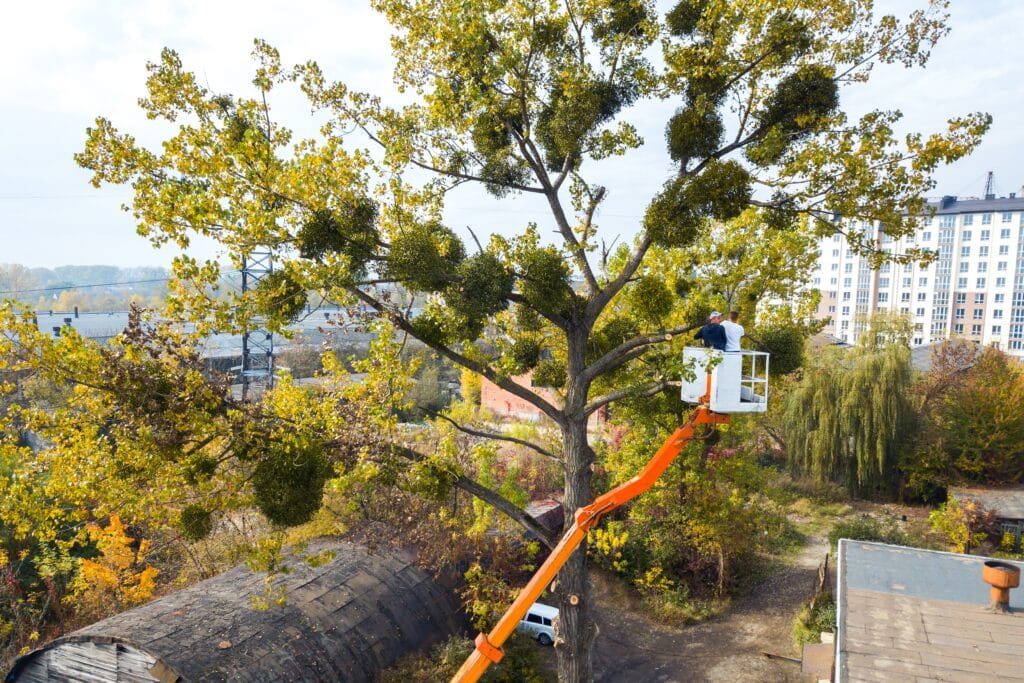
As we move into late summer and early fall, wildfire risk across Northern California ramps up dramatically. Between August and October, conditions are at their driest, and fire danger is at its highest.
If your property still has overgrown vegetation, stressed trees, or questionable spacing near structures, now is your last chance to act.
Here’s what to focus on in the final stretch before peak fire season hits full force.
Why August–October Is So Dangerous
By mid-August, most landscapes have gone months without meaningful rain. Even deep-rooted trees are feeling stress, and ambient moisture is at its lowest point all year.
At the same time:
- Winds increase, making fires spread faster
- Daytime temps spike, especially inland
- Lightning storms or human activity can easily spark ignition
The question is no longer whether fire conditions will be extreme—it’s whether your property is ready.
Defensible Space: What to Check Right Now
Start with a walk around your home or building and look at all vegetation within 100 feet. Use the CAL FIRE defensible space zones to guide your review:
Zone 0: 0–5 feet (Immediate Zone)
- Remove mulch, wood piles, and flammable plants
- Keep rooflines, decks, and gutters clear of debris
- Trim or remove shrubs that touch structures
Zone 1: 5–30 feet (Lean, Clean, Green Zone)
- Prune trees so branches don’t overhang the roof
- Remove dead branches and low-hanging limbs
- Keep grass mowed and plants spaced apart
Zone 2: 30–100 feet (Reduced Fuel Zone)
- Thin dense vegetation and overgrowth
- Create separation between tree canopies
- Eliminate ladder fuels that could carry fire upward
Don’t Forget Insurance & Local Regulations
Many California counties now require annual defensible space compliance, and property owners can face fines or abatement orders if they fail inspections.
Even more urgent: home insurance providers are increasingly dropping coverage or raising premiums for properties that aren’t fire-ready. Some require photos or inspections for renewal.
If you’re unsure whether your property meets requirements, we can help evaluate and document your readiness.
What We Recommend Right Now
In the final stretch before peak fire season, Image Tree Service offers:
- Emergency tree pruning and removals to eliminate fire-prone vegetation
- Defensible space assessments based on CAL FIRE and local codes
- Brush clearance and ground fuel reduction
- Ongoing monitoring for drought-stressed trees
We prioritize safety, compliance, and long-term tree health—with clear communication and fast scheduling when time matters most.
Frequently Asked Questions About Fire Season Prep
How often should I clear defensible space?
At minimum, defensible space should be maintained annually—ideally before peak fire season (by early summer). However, in high-risk areas like Sonoma and Napa counties, a mid-to-late summer checkup is highly recommended.
Do I need a permit to remove trees or brush?
It depends on your location and the size or type of tree. We’re happy to help you navigate local regulations and obtain any necessary permits.
What trees are considered high fire risk?
Highly flammable trees often include eucalyptus, juniper, pine, and certain conifers. Dead or drought-stressed trees also pose a major hazard, regardless of species.
Can you help if I’m being flagged by insurance or local fire agencies?
Absolutely. We offer defensible space assessments and can document the work we do to help with insurance renewals or fire marshal compliance.
Is it too late to schedule fire prevention work in August or September?
Not at all—but time is tight. Once red flag conditions begin, safe tree work becomes limited. Call us now to secure a spot before the fire activity spikes.
Book a Final Evaluation Before September Arrives
Our schedule fills quickly this time of year—and once red flag warnings begin, windows for tree work narrow fast.
- Don’t get caught unprepared
- Reduce fire risk and liability
- Stay compliant and protect your insurance
Contact us at 773-718-5362 today to schedule a final property evaluation and get your defensible space in shape for fire season.
Bonus Insight:
Even a few low branches or overgrown shrubs near your home can create a direct path for fire to spread. A quick walkthrough and minor pruning can make all the difference—and help crews defend your property if the worst happens.